


C++多重继承实战:从基础语法到二义性解决与菱形继承处理

C++允许一个派生类同时继承多个基类,即多重继承。虽然它扩展了单继承的能力,但也带来了结构复杂性和成员命名的二义性风险。本文将深入讲解多重继承的语法实现,分析同名数据和方法的成员访问冲突,并探讨如何处理源自同一祖先类的重复继承问题。
多重继承的基本概念
在C++中,多重继承是指一个派生类拥有两个或多个直接基类。这种机制使得派生类能够组合不同类的功能属性。合理使用多重继承可以简化代码设计,但需警惕由此引发的逻辑复杂度上升。
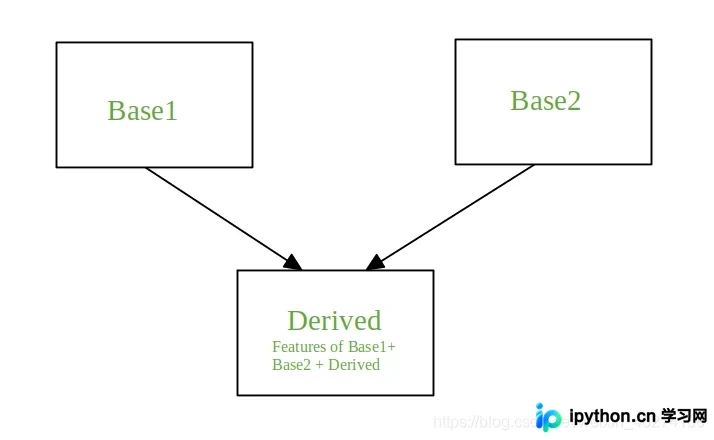
设计优势与潜在风险
- 优势:能自然地扩展单一继承的限制,灵活聚合多个类的功能。
- 劣势:可能导致代码结构臃肿;当多个基类存在相同名称的成员时,容易引发优先级和访问上的歧义(二义性);部分功能可能存在逻辑冲突。
多重继承的实现步骤
要实现多重继承,首先需要定义各个独立的基类,然后在派生类声明中指定多个基类作为父类,并在构造函数初始化列表中正确调用各基类的构造函数。
第1步:定义独立基类
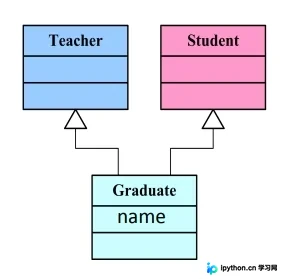
首先创建 Teacher 类,用于表示教师的基本属性。在头文件中声明保护级别的数据成员,并提供公有接口。
#ifndef PROJECT5_TEACHER_H
#define PROJECT5_TEACHER_H

#include <string>
using namespace std;

class Teacher {
protected:
    string name;
    int age;
    string title;
public:
    Teacher(string n, int a, string t);
    void display_teacher();
};

#endif //PROJECT5_TEACHER_H
对应的实现文件如下:
#include <iostream>
#include "Teacher.h"
using namespace std;

Teacher::Teacher(string n, int a, string t) : name(n), age(a), title(t) {}

void Teacher::display_teacher() {
    cout << "Teacher name: " << name << endl;
    cout << "age: " << age << endl;
    cout << "title: " << title << endl;
}
接着定义 Student 类,代表学生信息:
#ifndef PROJECT5_STUDENT_H
#define PROJECT5_STUDENT_H

#include <string>
using namespace std;

class Student {
protected:
    string name;
    char gender;
    double score;
public:
    Student(string n, char g, double s);
    void display_student();
};

#endif //PROJECT5_STUDENT_H
其实现如下:
#include <iostream>
#include "Student.h"
using namespace std;

Student::Student(string n, char g, double s) : name(n), gender(g), score(s) {}

void Student::display_student() {
    cout << "Student name: " << name << endl;
    cout << "gender: " << gender << endl;
    cout << "score: " << score << endl;
}
第2步:构建多重继承的派生类
定义 Graduate(研究生)类,使其同时继承自 Teacher 和 Student。注意基类名的排列顺序即为构造函数的调用顺序。
#ifndef PROJECT5_GRADUATE_H
#define PROJECT5_GRADUATE_H

#include "Teacher.h"
#include "Student.h"
#include <string>
using namespace std;

class Graduate : public Teacher, public Student{
private:
    double wage;
public:
    Graduate(string t_n, int t_a, string t_t, string s_n, char s_g, double s_s);
    void display_graduate();
};

#endif //PROJECT5_GRADUATE_H
在 Graduate.cpp 中实现构造函数,必须显式调用父类构造函数以完成初始化:
#include "Graduate.h"

Graduate::Graduate(string t_n, int t_a, string t_t, string s_n, char s_g, double s_s) :
    Teacher(t_n, t_a, t_t),
    Student(s_n, s_g, s_s) {}

void Graduate::display_graduate() {
    display_teacher();
    display_student();
}
最后在 main 函数中测试运行:
#include <iostream>
#include "Graduate.h"
using namespace std;

int main() {
    Graduate graduate1("王叔叔", 18, "隔壁老王", "我是小白呀", 'f', 99);
    graduate1.display_graduate();

    return 0;
}
控制台将按预期输出教师和学生的各自信息:
Teacher name: 王叔叔
age: 18
title: 隔壁老王
Student name: 我是小白呀
gender: f
score: 99
多重继承中的二义性处理
所谓二义性,是指在多重继承体系中,如果两个基类包含同名的数据成员或函数,编译器无法自动判断派生类引用的是哪一个父类的成员。
解决此问题的核心方法是在标识符前增加基类名限定符(如 ClassName::member)来明确指定访问目标。此外,良好的类层级设计应避免此类重名现象。
场景A:两个基类存在同名成员
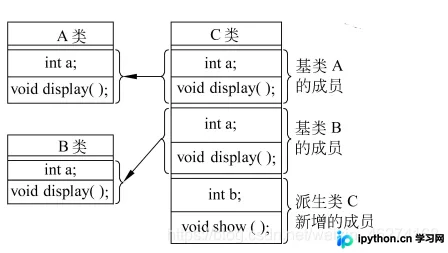
假设基类 A 和 B 都包含名为 num 的整型变量和 display 函数。
// A.h
class A {
public:
    int num;
    void display() {cout << "A's num:" << num << endl;};
};

// B.h
class B {
public:
    int num;
    void display() {cout << "B's num:" << num << endl;};
};
若派生类 C 同时继承 A 和 B:
class C: public A, public B{
public:
    int c;
    void display() {cout << c << endl;};
};
在使用 C 的对象时,直接使用 c1.num 会触发编译错误,因为编译器不知道是 A 的 num 还是 B 的 num。必须使用作用域解析运算符:
C c1;
c1.A::num = 1;  // 明确赋值给 A 的 num
c1.B::num = 2;  // 明确赋值给 B 的 num
c1.A::display();
c1.B::display();
错误写法示例会导致歧义编译失败:
C c1;
c1.num = 1;     // 错误:二义性
场景B:派生类自身定义了同名成员
当派生类 C 也定义了 num 时,派生类的成员会屏蔽(Shadow)基类的同名成员,使基类对应成员暂时变为“不可见”。
class C: public A, public B{
public:
    int num;           // 派生类自身定义
    void display() {cout << "C's num:" << num << endl;};
};
此时直接访问不带限定的 num 将指向 C 自身的成员:
C c1;
c1.num = 3;        // 修改 C 自身的 num
c1.A::num = 1;     // 修改 A 的 num
c1.B::num = 2;     // 修改 B 的 num
c1.display();      // 输出 C's num:3
c1.A::display();   // 输出 A's num:1
c1.B::display();   // 输出 B's num:2
场景C:公共基类引发的菱形继承
更为复杂的情况是,两个基类 A 和 B 均从同一个祖先类 N 派生而来,而类 C 又继承了 A 和 B。这就形成了“菱形继承”。如果不加干预,对象 C 中将包含两份 N 的属性,导致更严重的二义性。
以下是未采用虚拟继承的基础类定义:
class N {
public:
    int a;
    void display(){
        cout << "A::a=" << a <<endl;
    }
};

class A : public N {
public: int a1; };

class B : public N {
public: int a2; };
当类 C 继承 A 和 B 时,若要访问 N 提供的成员,通常需要严格指明路径:
class C: public A, public B{
public:
    int a3;
};

// main 中使用
C c1;
c1.A::a = 3;      // 合法:明确指定从 A 分支进入 N
// c1.B::display();  // 可能会引起二义性或需要具体指定
在上述代码片段中,通过 c1.A::a = 3 成功为 N 层级的特定副本赋值并打印。但在实际工程开发中,为了避免对象体积膨胀和逻辑混乱,通常推荐使用虚继承(Virtual Inheritance)技术来解决此类菱形二义性,确保所有子路径共享唯一的基类实例。
总结
C++的多重继承是一把双刃剑,既赋予了强大的组合能力,也引入了复杂的命名空间管理要求。开发者在面对同名数据和方法时,必须熟练掌握作用域解析运算符(::)的使用来消除编译器的二义性。对于涉及公共祖先的复杂继承关系,应优先评估是否需要引入虚继承机制。
以上就是C++多重继承详解及其作用介绍的详细内容,更多关于C++多重继承的资料请关注本站其它相关文章!
本站声明
本文内容仅供参考,不代表本站观点。转载或引用请注明出处。如发现内容问题,请通过联系我们页面反馈。















