


TypeScript中 type 与 interface 的区别详解

TypeScript 提供了 interface(接口)和 type(类型别名)两种定义数据结构的方式。它们都能描述对象结构、实现类继承及函数签名,但在基础能力上存在显著差异:type 更通用,支持基本类型、联合类型和元组;interface 具备声明合并特性,更适合扩展外部库的 API 定义。
1. 基础定义与适用范围
type 关键字可以为任何现有类型创建一个新的名字,其适用范围比 interface 更广:
- 基本类型别名:
type可以将字符串、数字等基础类型重命名,而interface仅能描述对象类型。 - 联合类型:使用
|定义联合类型是type的特有功能。 - 元组类型:利用
[]或泛组形式定义有序集合。 - 其他高级类型:如映射类型、条件类型等通常通过
type实现。
// type 示例:涵盖基本、联合、对象及元组
type UserName = string;
type UserId = string | number;
type Person = { id: UserId, name: UserName, age: number };
type Tuple = [number, string];
// const p: Tuple = [1, "abc"];
2. 核心区别
第1步:检查声明合并能力(Extendability)
interface 具有“开放封闭”的特性,同名接口可以自动合并。这在处理第三方库扩展时非常有用。如果代码中对同一接口名进行多次声明,TypeScript 会将它们的属性叠加:
// interface 声明合并示例
interface Person { name: string }
interface Person { age: number } // 自动合并,Person 现在包含 name 和 age
// const p: Person = { name: 'Tolu', age: 0 };
如果使用 type 定义同名类型,再次定义会导致编译错误:
// type 重复声明报错示例
type Person { name: string };
type Person { age: number }; // Error: 标识符“Person”重复。ts(2300)
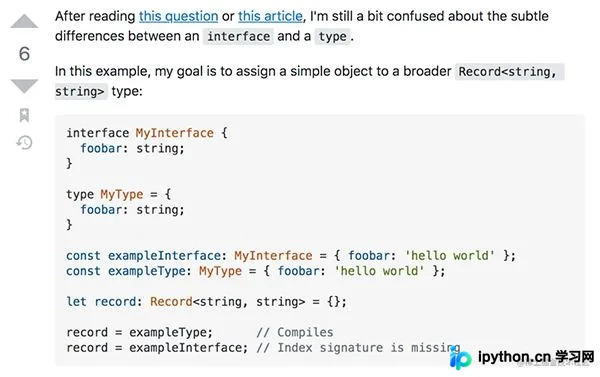
第2步:验证索引签名兼容性
当需要将一个具体类型的对象赋值给带索引签名的接口时,type 往往比 interface 更具灵活性。
// 定义带索引签名的类型/接口
type PropType = { [key: string]: string };
interface IPropType { [key: string]: string };

const dataObj = { title: "订单页面" };
// dataType 使用 type 定义的具体对象结构
type DataType = typeof dataObj;
// dataType1 使用 interface 定义的结构
interface DataType1 { title: string; }

let props: PropType;
props = dataObj;     // ✅ 成功
props = data1 as any; // ❌ 失败:index signature missing (DataType1 缺少显式索引签名)
// 注意:实际测试中 interface 定义的具名属性对象也可被接受,但若需强制兼容动态键值,type 组合类型更容易控制
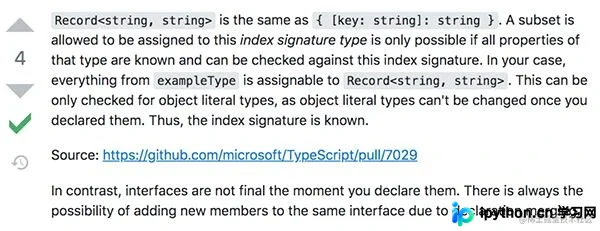
出现上述差异的原因是:interface 由于支持合并,编译器无法确定该接口最终会添加哪些未知成员,因此在严格模式下校验不通过;而 type 一旦定义即为静态快照,没有后续变数。
3. 相似之处
第3步:了解共同支持的高级特性
尽管有区别,二者在处理面向对象结构和函数签名方面是完全一致的:
描述对象和函数
// Type 定义函数签名
type SetPoint = (x: number, y: number) => void;

// Interface 定义函数签名
interface SetPointFunc {
    (x: number, y: number): void;
}
继承方式
extends 关键字可用于 interface 对 interface 或 type 的继承;而在 type 中继承需要借助交叉类型(Intersection Types &):
// Interface 互继承
type BaseA = { a: string };
interface Sub extends BaseA { b: number };

// Type 互继承
type BaseB = { a: string };
type SubType = BaseB & { b: number };
类实现(Implements)
Class 可以实现 interface 和 type 定义的类型。但需注意,如果 type 定义为联合类型(Union Type),则无法被 Class 直接 implements:
// ❌ 联合类型的 type 不能被 implements
type UnionType = { x: number } | { y: number };
class Foo implements UnionType { ... }
4. 最佳实践建议
根据官方推荐和社区经验,遵循以下原则可保持代码风格统一:
- 优先使用 interface:在大多数面向对象的场景下,interface 语义更清晰,且支持通过模块声明(Declaration Merging)灵活扩展第三方库的类型定义。
- 使用 type 处理特殊情况:需要使用联合类型(Union)、交叉类型(Intersection)、映射类型或简单的变量重命名时,必须选用 type。
- 组件 Props 管理:在 React/Vue 等框架中,对于组件输入输出(Props),推荐使用
type,这能有效防止开发者意外向类型中添加额外属性,确保接口契约不被破坏。
以上就是详解TypeScript中type与interface的区别的详细内容,更多关于TypeScript type interface区别的资料请关注本站其它相关文章!
本站声明
本文内容仅供参考,不代表本站观点。转载或引用请注明出处。如发现内容问题,请通过联系我们页面反馈。















