


基于Python的BP神经网络实现与异或问题解析

发布时间:2026-10-13 |
2人浏览过
本文深入解析基于Python的BP神经网络实现过程,重点探讨三层网络如何模拟非线性函数。文章详细阐述了初始化参数确定、隐含层节点选择、迭代收敛策略及全局最优解获取等核心难点,并通过完整代码示例演示了异或问题的训练与预测过程,为初学者提供实用的深度学习入门指南。
BP神经网络基础与异或问题挑战
BP(Back Propagation)神经网络被视为结构最为基础的神经网络模型,其三层架构设计足以有效模拟非线性函数的映射效果。
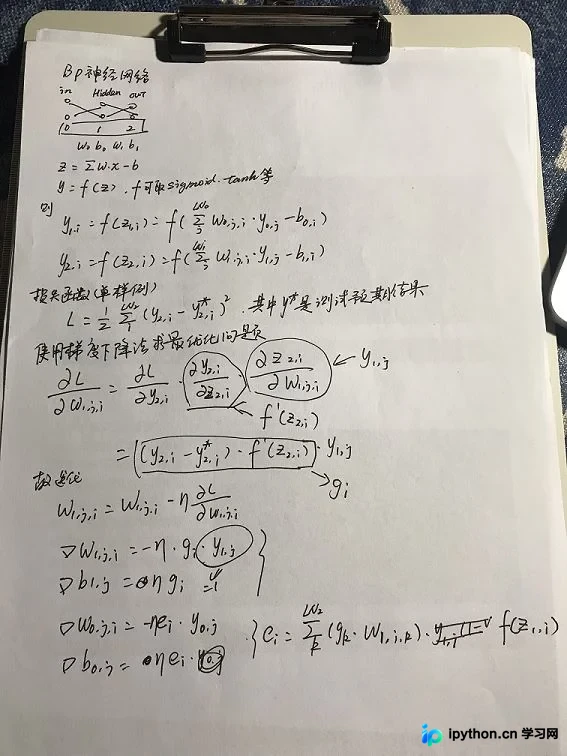
在实际应用与模型构建中,主要面临以下核心难点:
- 如何科学地确定模型初始化参数的取值?
- 如何合理确定隐含层中节点的数量配置?
- 需要设定多少次迭代次数?采用何种策略能实现更快的收敛速度?
- 如何确保算法能够跳出局部极小值,从而获得全局最优解?
Python实现代码详解
'''
neural networks

created on 2019.9.24
author: vince
'''
import math
import logging
import numpy
import random
import matplotlib.pyplot as plt

'''
neural network
'''
class NeuralNetwork:

 def __init__(self, layer_nums, iter_num = 10000, batch_size = 1):
  self.__ILI = 0;
  self.__HLI = 1;
  self.__OLI = 2;
  self.__TLN = 3;

  if len(layer_nums) != self.__TLN:
   raise Exception("layer_nums length must be 3");

  self.__layer_nums = layer_nums; #array [layer0_num, layer1_num ...layerN_num]
  self.__iter_num = iter_num;
  self.__batch_size = batch_size;

 def train(self, X, Y):
  X = numpy.array(X);
  Y = numpy.array(Y);

  self.L = [];
  #initialize parameters
  self.__weight = [];
  self.__bias = [];
  self.__step_len = [];
  for layer_index in range(1, self.__TLN):
   self.__weight.append(numpy.random.rand(self.__layer_nums[layer_index - 1], self.__layer_nums[layer_index]) * 2 - 1.0);
   self.__bias.append(numpy.random.rand(self.__layer_nums[layer_index]) * 2 - 1.0);
   self.__step_len.append(0.3);

  logging.info("bias:%s" % (self.__bias));
  logging.info("weight:%s" % (self.__weight));

  for iter_index in range(self.__iter_num):
   sample_index = random.randint(0, len(X) - 1);
   logging.debug("-----round:%s, select sample %s-----" % (iter_index, sample_index));
   output = self.forward_pass(X[sample_index]);
   g = (-output[2] + Y[sample_index]) * self.activation_drive(output[2]);
   logging.debug("g:%s" % (g));
   for j in range(len(output[1])):
    self.__weight[1][j] += self.__step_len[1] * g * output[1][j];
   self.__bias[1] -= self.__step_len[1] * g;

   e = [];
   for i in range(self.__layer_nums[self.__HLI]):
    e.append(numpy.dot(g, self.__weight[1][i]) * self.activation_drive(output[1][i]));
   e = numpy.array(e);
   logging.debug("e:%s" % (e));
   for j in range(len(output[0])):
    self.__weight[0][j] += self.__step_len[0] * e * output[0][j];
   self.__bias[0] -= self.__step_len[0] * e;

   l = 0;
   for i in range(len(X)):
    predictions = self.forward_pass(X[i])[2];
    l += 0.5 * numpy.sum((predictions - Y[i]) ** 2);
   l /= len(X);
   self.L.append(l);

   logging.debug("bias:%s" % (self.__bias));
   logging.debug("weight:%s" % (self.__weight));
   logging.debug("loss:%s" % (l));
  logging.info("bias:%s" % (self.__bias));
  logging.info("weight:%s" % (self.__weight));
  logging.info("L:%s" % (self.L));

 def activation(self, z):
  return (1.0 / (1.0 + numpy.exp(-z)));

 def activation_drive(self, y):
  return y * (1.0 - y);

 def forward_pass(self, x):
  data = numpy.copy(x);
  result = [];
  result.append(data);
  for layer_index in range(self.__TLN - 1):
   data = self.activation(numpy.dot(data, self.__weight[layer_index]) - self.__bias[layer_index]);
   result.append(data);
  return numpy.array(result);

 def predict(self, x):
  return self.forward_pass(x)[self.__OLI];


def main():
 logging.basicConfig(level = logging.INFO,
   format = '%(asctime)s %(filename)s[line:%(lineno)d] %(levelname)s %(message)s',
   datefmt = '%a, %d %b %Y %H:%M:%S');

 logging.info("trainning begin.");
 nn = NeuralNetwork([2, 2, 1]);
 X = numpy.array([[0, 0], [1, 0], [1, 1], [0, 1]]);
 Y = numpy.array([0, 1, 0, 1]);
 nn.train(X, Y);

 logging.info("trainning end. predict begin.");
 for x in X:
  print(x, nn.predict(x));

 plt.plot(nn.L)
 plt.show();

if __name__ == "__main__":
 main();
收敛效果与总结
以下是具体的模型收敛效果展示与分析。
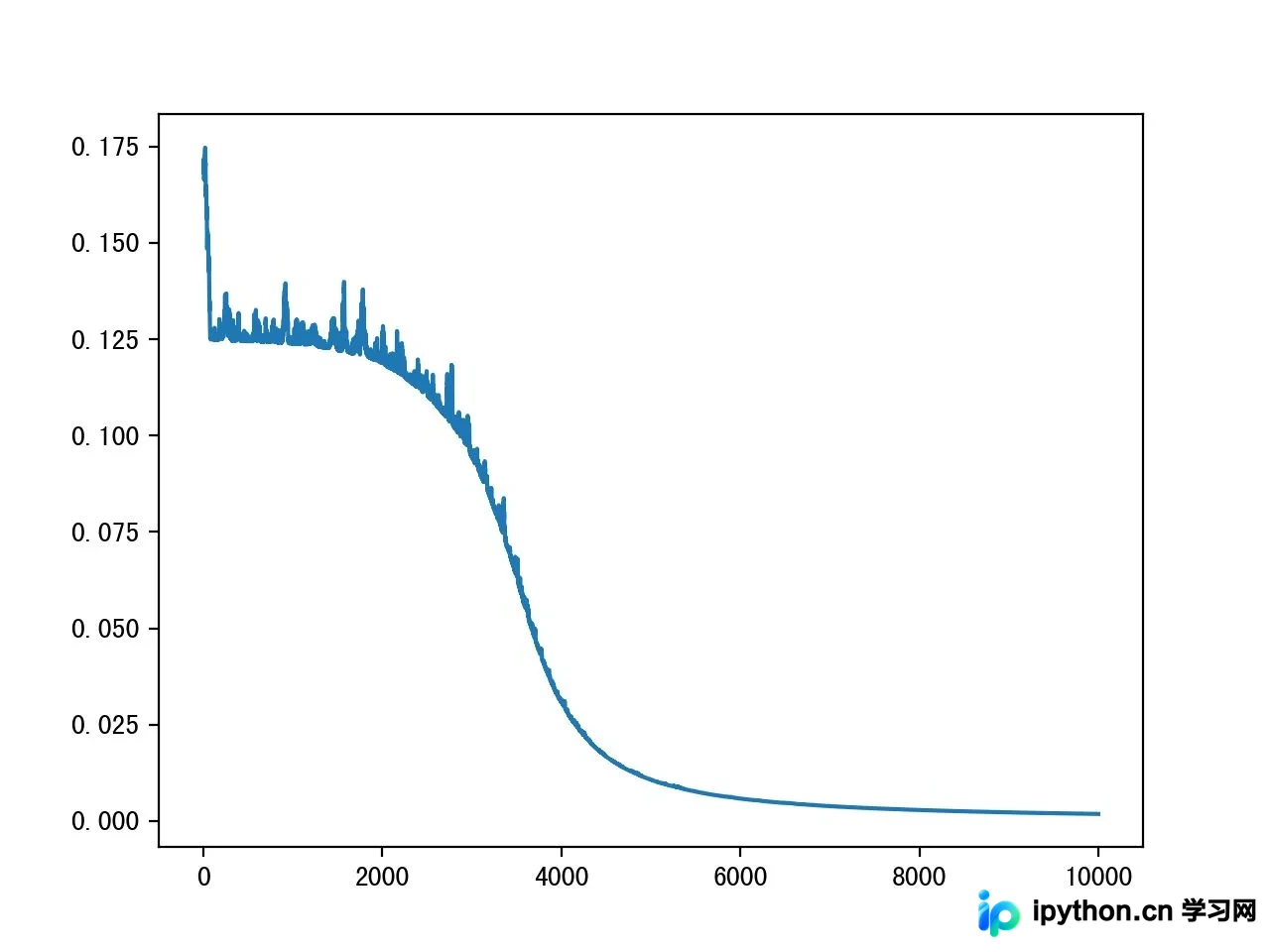
综上所述,本文完整呈现了基于Python的BP神经网络实现细节及其在异或问题上的应用过程,希望能为读者的学习与研究提供有益参考,同时也欢迎大家继续关注与支持本站的技术分享。
本站声明
本文内容仅供参考,不代表本站观点。转载或引用请注明出处。如发现内容问题,请通过联系我们页面反馈。















